Online Casinos with Malta Licences in the UK
 Available in GB
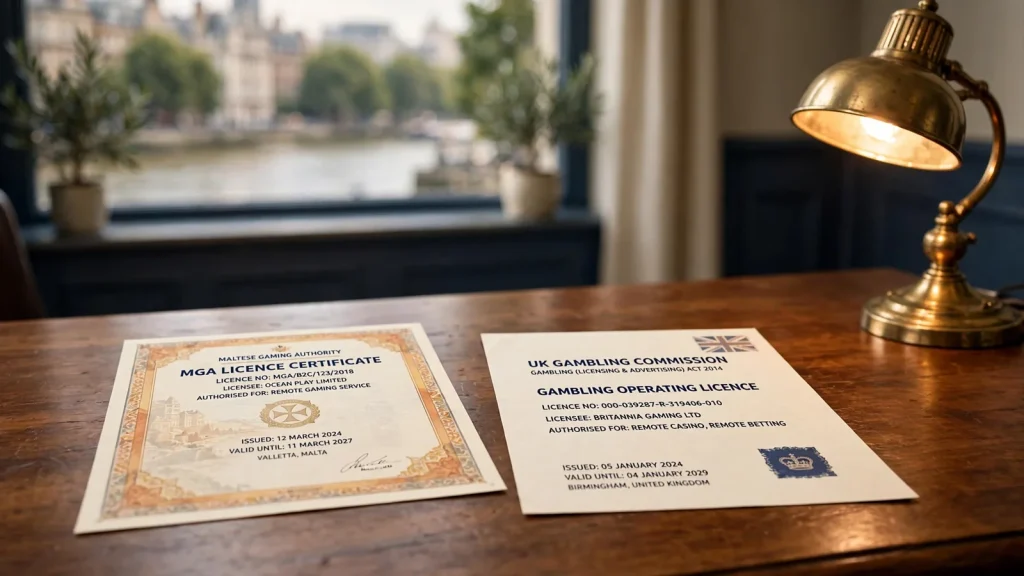
A Malta authorisation may cover an operator under another jurisdiction, but it does not replace the permission required to offer gambling in Great Britain.
Table of Contents
- A Malta Licence Does Not Authorise Gambling in Great Britain
- What “Best” Means When UK Permission Comes First
- How to Read Claims About Malta Casino Sites
- GamStop and Casinos Outside the UK Scheme
- Real-Money Play and the Protection of Your Balance
- Can a Malta-Licensed Casino Accept Players in Great Britain?
- Bonuses, Wagering Requirements and the Cost of a Deal
- The Malta Gaming Authority and the Limits of Its Role for UK Players
- New Malta Casino Sites: Check the Licence Before You Sign Up
- Does Being Based in Malta Change the Rules?
A Malta Licence Does Not Authorise Gambling in Great Britain
A casino may be operated from Malta and hold an authorisation there, but that does not by itself give it permission to offer remote gambling to customers in Great Britain. For that, the operator needs a UKGC licence. The requirement applies regardless of where the business is physically based.
This distinction matters because an operator’s location and the market it serves are separate questions. A company can be established overseas while making its gambling facilities available to people in Great Britain. Its overseas base does not move those customers outside the rules that apply to remote gambling offered here. Nor does an authorisation issued in another country take the place of the permission required for the British market.
The same principle applies whether a site describes itself as a Malta-licensed casino, advertises a Malta-issued authorisation, or presents its connection with Malta as a reason it can serve customers internationally. Such a credential may concern the operator’s standing under another jurisdiction’s rules. It is not a UKGC licence, and it does not confer the right to offer gambling to consumers in Great Britain.
In practical terms, the relevant issue is not simply where the website is hosted, where its company is registered, or which authority has authorised it elsewhere. It is whether the operator has the UKGC licence required to provide remote gambling to customers in Great Britain. A business cannot replace that permission by pointing to its offices or licence abroad.
That legal line is not a technicality. The UKGC licence is the permission required for an operator to serve this market. If an operator offers gambling services to UK consumers without it, the operator is acting unlawfully. A Malta authorisation does not change that position, even if the site is accessible from a British address or uses British-facing language and currency.
The word “licence” can make two different things sound interchangeable when they are not. A Malta licence refers to an authorisation under Malta’s system; a UKGC licence is the permission relevant to offering remote gambling in Great Britain. The fact that both are licences does not make them transferable, equivalent, or valid in one another’s territory. An operator needs the permission that corresponds to the market it serves.
Online Casinos With No Sister Sites in the UK
This also means that a site’s overseas status should not be read as a special route around British requirements. If the operator is providing remote gambling facilities to consumers in Great Britain, its physical location does not remove the UKGC requirement. The rule follows the service offered to the customer, rather than the address from which the operator runs its business.
For readers considering Malta-focused sites, the useful starting point is therefore a distinction, not a judgement about Malta itself. An overseas authorisation may be relevant to the operator’s activities under the system that issued it, but it cannot establish permission to serve Great Britain. Whether a particular site holds the required UKGC licence is a separate matter from whether it has a Malta-based operation or authorisation.
This point is easy to lose in marketing language. Phrases such as “licensed in Malta” may sound reassuring, but they do not answer the question that matters for a customer in Great Britain: does the operator hold the UKGC licence required to offer remote gambling here? The two statements can both be true—an operator could hold an overseas authorisation and a UKGC licence—but one does not prove the other.
A Malta-based operator that also holds the relevant UKGC licence can offer remote gambling in Great Britain under that UK permission. An operator relying only on an authorisation from Malta cannot. The legal distinction is about the authority required for the market, not a blanket claim that every operator connected with Malta has the same status.
It is worth keeping that distinction in view before treating an overseas licence as an answer to questions about access or legitimacy. Location describes where a business is based; an overseas authorisation describes permission under another system. Neither substitutes for the UKGC licence required when remote gambling is offered to customers in Great Britain.
What “Best” Means When UK Permission Comes First
If you are assessing online casinos for use in the UK in 2026, check each operator’s current licensing status directly; the information below does not confirm any MGA licence. The listed payout timeframe is one practical detail to consider.
1. Chanze
Payout speed: 1-3 business days Chanze lists a payout speed of 1–3 business days. You can use that timeframe as one point of reference when assessing it.
2. x3bet
Payout speed: 1-3 business days x3bet lists payouts within 1–3 business days. You should verify its current licensing status separately.
3. Amunbet
Payout speed: 1-3 business days Amunbet gives a payout timeframe of 1–3 business days. You have this timing as a stated detail to consider.
4. Zombillion
Payout speed: 1-3 business days Zombillion lists a payout speed of 1–3 business days. You will need to check licensing information independently.
5. BeOnBet
Payout speed: 1-3 business days BeOnBet states that payouts take 1–3 business days. You can consider this timeframe alongside independently verified licensing details.
6. Dieselwin
Payout speed: 1-3 business days Dieselwin lists payouts within 1–3 business days. You should confirm any licence claims directly before relying on them.
7. NightLuck
Payout speed: 1-3 business days NightLuck gives a payout speed of 1–3 business days. You have a stated timeframe, but no licensing details are provided here.
8. Revery Play
Payout speed: 1-3 business days Revery Play lists a payout timeframe of 1–3 business days. You should check its current licence status separately.
9. Britsino
Payout speed: 1-3 business days Britsino states a payout speed of 1–3 business days. You can use that as a practical detail while verifying licensing independently.
10. EvoSpin
Payout speed: 1-3 business days EvoSpin lists payouts within 1–3 business days. You should confirm its current licensing status directly.
“Best” is not a useful label until you establish which market a casino is serving. A site may be based in Malta and hold an authorisation there, but that does not by itself make it a lawful choice for customers in Great Britain. If you are assessing a casino for play from England, Scotland or Wales, the relevant starting point is whether it holds a UKGC licence. An overseas licence is not a substitute.
That changes how to interpret searches for the best online casino in Malta or the best Malta casinos. Those phrases can refer to casinos available to people in Malta, or to sites with a Maltese connection that are presented to British customers. These are not interchangeable categories. A list described as the best MGA casinos may tell you something about the sites’ claimed or confirmed Maltese authorisations; it does not, on its own, answer whether they may lawfully offer gambling to you in Great Britain.
An MGA licence alone does not answer whether a casino may lawfully offer gambling to you in Great Britain; a UKGC licence is the required permission.
For a British player, the more useful question is whether the operator’s UKGC status brings the protections that come with serving this market under that regulator. Permission is the threshold, not a complete verdict on quality. A licence does not tell you whether a particular site suits your preferences, and it should not be treated as a promise of a good experience. It does, however, connect the operator to requirements that matter when you play.
What UK oversight means in practice
UKGC-licensed operators must use games that have been tested and certified by approved testing houses. This gives you a meaningful standard to look for when considering the games offered: the games must pass through an approved testing route. It does not mean that every session will go your way, or that a game’s certification predicts what will happen to an individual player. Certification is oversight of the game, not a forecast of your results.
There is also a route for handling complaints. A UKGC licensee must have an approved Alternative Dispute Resolution provider available for player complaints. ADR is independent dispute resolution: it provides a route beyond the operator’s own customer-service response when a complaint cannot be settled directly. This is a concrete difference in the complaint framework, though it does not mean every complaint will be decided in your favour. The presence of a process is a safeguard; it is not a guarantee of an outcome.
The Commission also requires licensed operators to offer tools that let customers set deposit and loss limits, receive session-time reminders and reality checks, and use GamStop self-exclusion. These controls give you ways to place boundaries around play or take a break. They are not proof that gambling is risk-free, and their value depends on whether you use them. Still, they are part of the operating requirements, rather than optional features a site can present as a special favour.
Taken together, these requirements offer a more grounded basis for judging a casino than its Maltese branding, game catalogue or promotional language. They concern the oversight of games, a formal complaint route and player-control tools. You can then make your own assessment of the site’s design and whether its terms are clear, without confusing attractive presentation with regulatory standing.
Game Certification
Games must be tested and certified by approved testing houses to ensure a meaningful standard of oversight.
Complaint Handling
Licensees must provide an independent Alternative Dispute Resolution (ADR) provider for player complaints.
Player Controls
Operators must provide deposit and loss limits, session reminders, and access to GamStop self-exclusion.
Treat “best” as a comparison within the right market
A list of best online casinos in Malta may be aimed at a different audience from a British player. Even a carefully prepared MGA casino list does not establish that each entry is available under the rules that apply in Great Britain. The same applies to a search for the best MGA casino: the authority named in the phrase is not, by itself, the permission relevant to British customers.
If a site is being considered for play from Great Britain, assess it first against the UKGC standard, then consider what its protections and services actually provide. This avoids treating a Malta connection as a quality mark for every purpose. A casino may have a Maltese presence and still not meet the regulatory starting point needed for British play.
Promotions should not reverse that order. A tempting offer, including what appears to be the best Malta casino bonus, cannot compensate for the absence of the required UK permission. Nor does a bonus establish that the operator offers the safeguards associated with a UKGC licence. Consider the regulatory status separately from any offer’s conditions; the terms of bonuses are a distinct question.
“Best” therefore needs a market attached to it. For someone in Great Britain, it should mean a casino that is lawfully available here and can be assessed against the protections required of UKGC licensees—not simply a site described as Maltese or labelled among the best MGA casinos. Once that distinction is clear, comparisons become more useful: you are comparing sites within the framework that applies to you, rather than relying on a foreign licence or a ranking label to do that work.
Non-GamStop European Casinos: UK Rules Explained
How to Read Claims About Malta Casino Sites
A Malta-themed website may describe itself as licensed, display a regulator’s emblem or use the phrase “MGA casino”. Treat these as claims to verify, not proof that the site is authorised to serve you. A logo can be copied, and a statement in a footer does not establish which company operates the casino or what the stated licence covers.
Start with the operator’s legal name and the regulator it says issued its operating licence. Look for those details in the site’s terms or other formal information, rather than relying on a banner or promotional page. Then compare the operator name and licence details with information published by the named regulator. If the site gives no identifiable company or licence reference, or the details do not match, you cannot confidently establish the claim from the site alone.
Pay attention to whether the claim concerns the same business you are dealing with. A group may use several brands, while the legal operator named for one site may differ from the company behind another. A reference to a Malta Gaming Authority authorisation should therefore be checked against the operator and site in question; a general statement that a group holds a licence is not enough to confirm that a particular casino is covered.
Most importantly, an overseas authorisation and permission to serve customers in Great Britain are different things. The UK Gambling Commission does not approve licences issued by overseas regulators, maintain reciprocal arrangements with them or handle complaints about operators licensed outside the UK. A Malta authorisation is not a UKGC licence, and the two should not be presented as interchangeable.
Do
- Verify the operator’s legal name in the terms
- Compare licence details with the regulator’s official records
- Check if the licence covers the specific site you are using
Don’t
- Rely on logos or emblems displayed on a banner
- Assume a footer statement is sufficient proof of authorisation
- Treat a general group licence as confirmation for every brand
That distinction matters when you are comparing Malta-based casino sites, whether established or newly launched. A claim of MGA oversight may tell you which authority the operator says is responsible for its Malta authorisation. It does not, by itself, establish that the site has permission to serve customers in Great Britain. Nor does the presence of a UKGC logo or a reference to British customers settle the matter unless the operator’s UK status can be independently confirmed.
Be cautious with claims that combine licensing language and attractive promotions. Malta casino bonuses or Malta online slots may feature prominently on a site, but promotional wording cannot verify who holds the licence or where the operator is authorised to offer gambling. Check the legal details separately from the offer. A polished site, familiar games and confident statements about regulation are not substitutes for matching the operator’s identity and licence information against the relevant authority’s own records.
If the information is inconsistent, unclear or impossible to corroborate, do not treat the licence claim as established. The key is not whether a site calls itself one of the best or top Malta casinos, but whether you can verify who operates it and what its stated authorisation actually means for you.
GamStop and Casinos Outside the UK Scheme
GAMSTOP is the national self-exclusion scheme for gambling sites licensed by the UK Gambling Commission. Every UKGC-licensed operator must participate, so registering with GAMSTOP excludes you from all sites covered by that scheme. The exclusion can be set for six months, one year or five years.
This matters when a site is described as a Malta casino or an MGA-licensed casino that is not on GAMSTOP. An overseas location or authorisation does not make a site part of the UK scheme. Non-UKGC licensed casinos, including those operating from Malta, do not participate in GAMSTOP.
That means a GAMSTOP exclusion does not extend to those casinos. They do not provide the same shared self-exclusion arrangement, and you should not treat an account there as covered simply because you have registered with GAMSTOP. The distinction is practical: the scheme applies across UKGC-licensed gambling sites, not across every online casino that may be accessible from Great Britain.
Non-GAMSTOP Curacao Casino Sites: Licence Checks
If you are considering a Malta-based site, the phrase “not on GAMSTOP” is not a sign of an alternative version of the scheme. It means the site sits outside it. A Malta authorisation, if the site holds one, does not change that point. Do not assume that the operator can see your GAMSTOP status or will block you because you have registered.
For someone who has chosen self-exclusion to prevent access to gambling, that gap is important. A site outside GAMSTOP may remain available even while the exclusion is active. Relying on the scheme alone would therefore leave a boundary around UKGC-licensed sites, rather than every casino online. That is an inconvenient limit, but a clear one.
Before you make any decision about an account, consider what you want the exclusion to do. If your aim is to avoid gambling across the UKGC-licensed market, GAMSTOP covers those operators. If you are looking at a non-UKGC licensed casino, do not assume that it will honour the same exclusion or offer the same coordinated protection. Its absence from the scheme is not a small technical difference; it changes which sites the exclusion reaches.
GAMSTOP Gap
A GAMSTOP exclusion does not extend to non-UKGC licensed casinos, meaning these sites may remain available even while your exclusion is active.
If you have already registered with GAMSTOP and are tempted by a casino outside it, pause before signing up or depositing. The scheme cannot block access to operators that do not participate. Looking for a Malta casino “without GAMSTOP” therefore means looking beyond the reach of the UK scheme, not finding a way to extend its protection.
Real-Money Play and the Protection of Your Balance
When you deposit at an online casino, the balance shown on screen can feel like money sitting in an account in your name. In practice, it is a record of what the operator owes you. That distinction matters if the business runs into financial trouble: the figure on your account does not, by itself, explain how the money behind it is held.
For a UKGC-licensed operator, player funds must be kept separate from the money used to run the business. This separation is intended to protect players’ money if the casino becomes insolvent. The operator should not treat customer funds as ordinary working capital, available for its own bills and day-to-day costs.
That is a specific safeguard, not a reason to assume every balance is guaranteed to be returned immediately or in full in every circumstance. If a business fails, the practical process of establishing what it owes and dealing with customer funds can still matter. The important point is that UKGC licensees are required to separate player funds from operational funds, so the money is not simply mixed into the company’s general finances.
This is why the authority behind a Malta online casino matters when you are considering depositing real money. A site’s location, branding or account dashboard does not tell you whether the UK player-fund rule applies. The safeguard described here is tied to UKGC licensing; it should not be assumed to apply to non-UKGC licensed casinos merely because they accept deposits or display balances in pounds.
Anjouan casino licence UK: what it authorises
Before paying in, look for clear information about who operates the site and what arrangements apply to customer balances. Treat the displayed balance as a claim against the operator, not as proof of where the underlying funds are held. If the information is unclear, do not use a reassuring phrase such as “player protection” as a substitute for understanding the actual arrangement.
The distinction is especially relevant when comparing MGA casinos with operators serving customers under a UKGC licence. A Malta-related authorisation and the UK player-fund requirement are not interchangeable. For your balance, the question is not simply where the company is based or which regulator appears in its footer; it is whether the operator is subject to the UK requirement to keep player funds apart from business funds.
A careful deposit decision therefore involves more than checking whether a site lets you create an account. Consider what happens to money you have paid in, what the operator says about customer balances, and whether that statement relates to the protections required of a UKGC licensee. If a casino’s terms are difficult to understand, pause before depositing. Once real money is with an operator, the quality of the safeguards behind the account matters more than the balance displayed on screen.
Can a Malta-Licensed Casino Accept Players in Great Britain?
A Malta-based casino can serve customers in Great Britain only if it also has the required UKGC licence when it offers real-money gambling. The operator’s location does not change that requirement: it applies to online gambling offered to customers in England, Scotland and Wales, whether the business is based in Malta or elsewhere.
That means a Malta Gaming Authority authorisation, on its own, is not permission to offer real-money casino gambling in Great Britain. The relevant question is not simply whether a site has a licence, but whether it holds the operating licence required for the market it is serving. A site’s willingness to let you register or access its games does not establish that it is authorised to offer real-money play here.
Online Casino No Registration UK: What to Check
Age is a separate condition. The Gambling Commission requires operators to check that customers are at least 18 before they can deposit or play. A Malta licence does not remove that requirement for an operator serving Great Britain, and a customer should not treat an account being available to open as proof that the site has completed the necessary checks.
The distinction matters when a site advertises free play as well as real-money gambling. The words “free play” do not, by themselves, answer whether the operator is authorised to offer real-money gambling to customers in Great Britain. If you are considering depositing or playing for money, the applicable question remains whether the operator holds a UKGC licence. A promotional label cannot replace that permission.
Great Britain is not the whole United Kingdom for regulatory purposes. The Gambling Act 2005 covers England, Scotland and Wales, while Northern Ireland has a separate regulatory regime. The UK Gambling Commission does not regulate remote gambling in Northern Ireland in the same way that it does in Great Britain. So a statement about UKGC licensing requirements for Great Britain should not be read as a full description of Northern Ireland’s rules.
Non-Gamban Casinos in the UK: What It Means
For someone in England, Scotland or Wales, the practical dividing line is therefore real-money gambling offered by the operator: if the site provides it to customers in Great Britain, it needs a UKGC licence, regardless of a Malta connection. Being able to visit a site, see games or create an account does not answer whether it may lawfully offer you real-money play. Nor does a Malta authorisation alone settle the question. Keep the jurisdiction in view, and distinguish what a site says about its overseas status from the permission required for the service it is offering where you live.
Bonuses, Wagering Requirements and the Cost of a Deal
A bonus is not the same as cash you can withdraw. Its wagering requirement sets how much you must stake on eligible games before any bonus value can become withdrawable. Read that condition alongside the offer amount: a headline credit can look generous while carrying a substantial betting commitment.
One specialist affiliate review gives a concrete illustration: with a £20 bonus and a 35-times wagering requirement, you would need to place £700 in qualifying bets before the bonus could be converted into withdrawable cash. That is an example of how the calculation works, not a standard term for Malta casino bonuses. The operator’s own terms determine the actual requirement, which games count and whether the bonus expires or is subject to other conditions. Check those details before accepting an offer.
Bonus Calculation
Step 1: Identify the requirements
Take a bonus amount (e.g., £20) and its associated wagering requirement (e.g., 35x).
Step 2: Calculate the total stake
Multiply the bonus by the requirement (£20 × 35) to find the total amount needed to be staked (£700).
Step 3: Account for game contribution
Check the contribution rate of your chosen game; if it is less than 100%, you will need to stake more than the calculated total to clear the bonus.
The word “qualifying” matters. A stake may not count if the game is excluded, or it may count only in part. Slots commonly contribute the full amount of each eligible bet towards the requirement. Table games can contribute 10% or 20%, while some may contribute nothing. If you wager the same amount on a game that counts at a lower rate, you make less progress towards clearing the requirement.
This can make a bonus more expensive to use than its face value suggests. You may need to stake more than the headline wagering figure implies if your chosen games contribute only partially. And if a game contributes nothing, bets on it do not advance the bonus requirement at all. Check the game-contribution table and the rules for what happens to any remaining bonus if you stop playing or the offer ends.
The same care applies to a no-deposit offer: the absence of an initial payment does not, by itself, tell you whether winnings are withdrawable or what conditions apply. Read the full terms, including the qualifying games and withdrawal conditions, rather than relying on the offer label.
For any Malta-linked or MGA-branded offer, treat the bonus terms as a separate question from the site’s authority to accept customers in Great Britain. A promotional deal does not establish that permission. Compare the required betting with what you would choose to play without the bonus; if the offer would make you stake more than intended, declining it may be the clearer choice.
The Malta Gaming Authority and the Limits of Its Role for UK Players
The Malta Gaming Authority (MGA) and the UK Gambling Commission (UKGC) are separate regulators with different remits. The UKGC licenses and oversees gambling in Great Britain. The MGA is Malta’s gambling regulator, but its role does not make it a UK regulator or give it authority to decide how the UKGC handles gambling in Great Britain.
Casino Without a Swedish Licence: UKGC Rules
That distinction matters when you encounter a Malta Gaming Authority online casino licence or a list of MGA-licensed casinos. Such information concerns an operator’s authorisation in Malta; it does not establish that the UKGC has approved the operator, its licence or its services. The UKGC does not approve licences issued overseas, and it has no reciprocal agreements with offshore regulators. A Malta authorisation and a UKGC licence are not interchangeable credentials.
The same boundary applies if a dispute arises. The UKGC does not accept complaints about operators licensed outside the UK. It is therefore not a general appeals service for anyone who has a problem with an online casino, and an MGA licence does not bring an operator within the UKGC’s complaints process. A player should not assume that the UK regulator can take up a case simply because the casino is accessible online or presents itself as regulated abroad.
This is also why phrases such as “MGA-regulated” need to be read in context. They identify a claimed relationship with the Maltese regulator; they do not answer what authority applies to a customer in Great Britain or which regulator would consider a complaint. The UKGC’s remit is tied to its own licensing and oversight role, not to certifying the decisions of the MGA or other overseas bodies.
For a UK player, the practical limit is clear: the UKGC can oversee gambling within its jurisdiction, but it cannot validate an overseas licence or serve as a route for complaints against an operator licensed outside the UK. An MGA casino listing may tell you something about Malta’s regulatory framework. It cannot, by itself, tell you that the UKGC has approved the casino or will intervene if a dispute occurs.
Gibraltar casino licence in the UK: what it means
New Malta Casino Sites: Check the Licence Before You Sign Up
A newly launched casino may present itself as a Malta-based site, but its age and location do not establish that it can lawfully serve customers in Great Britain. Before you create an account or deposit, check whether the operator holds a UK Gambling Commission licence for remote gambling. The requirement applies whether the business is based in Malta or elsewhere.
Treat the operator’s own description of its credentials as a starting point, not as proof. Look for the legal name of the business responsible for the site and the details it gives about its UKGC licence. Then check those details against information from the Gambling Commission. A licence belonging to a different company, or details that cannot be matched to the operator, should not reassure you.
Pay attention to the site address as well as the company name. A new brand may be run by a business whose name is not prominent on the homepage, so identify the operator behind the account and payment arrangements before proceeding. If the site gives no clear information about who runs it, or if its stated licence details do not correspond to that operator, do not deposit while the discrepancy remains unresolved.
This matters whether you are considering a new Malta casino, a site describing itself as MGA-licensed, or a payment option such as Neteller. A payment method does not establish that the casino is authorised to offer gambling in Great Britain. Nor does a polished launch, a new-games announcement or a Malta address substitute for the required UKGC licence.
Newness is not a quality measure. A recently opened site has had less time to build a record that you can assess, but that does not lower the legal standard for serving customers here. Make the licence check before sharing payment details or placing a real-money bet, not after a problem arises. If you cannot establish that the operator has the required UKGC licence, do not sign up on the assumption that an overseas authorisation is enough.
Curacao Casino Licence in the UK: What It Means
Does Being Based in Malta Change the Rules?
An online casino’s address tells you where the operator is based; it does not determine which rules apply when the operator serves customers in Great Britain. A Malta-based business offering remote gambling to people in Great Britain must hold a UKGC licence, regardless of where it has its offices or runs its operations.
That distinction matters when comparing Malta-based online casinos. A Malta Gaming Authority (MGA) licence is an authorisation from the Maltese regulator. It does not, by itself, give an operator permission to offer remote gambling in Great Britain. The relevant question is not simply whether the company is based in Malta or holds an MGA licence, but whether it also has the required UKGC licence for the British market.
The operator’s location also does not change the specific safeguard that applies to MGA licensees’ handling of player funds. They must keep those funds in segregated accounts at an approved financial institution. That is a requirement attached to MGA licensing; it is not evidence of UK permission, nor a substitute for it.
The same distinction applies whatever payment method a site advertises. A card or voucher option does not change the operator’s location, the regulator that issued its licence, or the requirement to hold a UKGC licence when offering remote gambling to customers in Great Britain.
So, if you encounter a casino described as Malta-based, treat the location and each licence as separate pieces of information. Malta may be where the operator is established, and an MGA licence may carry its own requirements, but neither fact changes the rules for serving customers in Great Britain. A business address is not a regulatory permission slip.
How can you check whether an online casino is legal?
For play in England, Scotland or Wales, check whether the operator holds a UK Gambling Commission licence. A licence from Malta or another jurisdiction does not replace the UK licence required to offer remote gambling in Great Britain.
Are offshore casinos legal for UK players?
An offshore operator must hold a UK Gambling Commission licence to offer remote gambling to customers in Great Britain. Offering gambling to UK consumers without that licence is illegal for the operator.
Are no-deposit spin offers legal in Great Britain?
You must be physically located in Great Britain to claim a no-deposit offer.
What tools do UK operators have to provide?
UK-licensed operators must offer deposit and loss limits, session limits, time-outs, self-exclusion through GamStop, and reality checks or session time reminders.
Casinos

£1 Minimum Deposit Casinos in the UK Explained
A £1 deposit may fund a real-money balance, but promotions, games, payment methods and withdrawals...

£10 Minimum Deposit Casinos in the UK: What to Check
Cashier rules vary by operator, so check the deposit limit, payment method and bonus terms...

£2 Minimum Deposit Casinos in the UK: What to Know
A low entry point is only one factor: cashier rules, bonus terms and payment limits...

£20 Minimum Deposit Casinos in the UK: What to Know
Deposit thresholds vary by operator, and meeting a £20 minimum is an entry condition, not...

£3 Minimum Deposit Casinos in the UK: Key Checks
The cashier threshold can differ by payment method, while promotions and withdrawals may follow separate...

£4 Minimum Deposit Casinos in the UK: What to Check
A £4 entry point applies to a deposit, while accepted amounts can vary by payment...

£5 Minimum Deposit Casinos in the UK: What to Check
A £5 cashier minimum is an entry condition, not a guarantee that every game, bonus...

Anjouan casino licence UK: what it authorises
An overview of the licence’s scope, its limits for UK-facing casinos, and the protections and...

UK Casino Apps: Choosing a Licensed Mobile Service
An app is an interface to an operator’s mobile casino service, so licensing and account...

Foreign Casinos for UK Players: Licensing and Risks
Foreign operators may accept British customers without UKGC oversight, affecting the protections, payment options and...

International Casinos for UK Players: What to Know
A practical look at licensing, bonus conditions, crypto payments, non-GamStop safeguards and the terms that...

Mobile Casino Payments with Phone Credit in the UK
Phone-credit deposits charge a mobile account or prepaid balance, and the payment route may influence...

Offshore casino sites for UK players: rules and risks
Offshore status does not mean a site is authorised in Great Britain; the article explains...

Offshore casinos for UK players: licences and risks
A guide to licensing status, payment trade-offs, bonus conditions and the protections absent outside the...

British Casinos Not on GamStop: Rules and Risks
GamStop applies to UKGC-licensed operators; the guide also examines licensing claims, legal status, bonus terms...

UK Casinos With No ID Verification: What It Means
The phrase can describe the timing or form of checks, but it does not mean...

Casino Sites Not Registered with GamStop: UK Guide
The guide distinguishes UKGC-covered exclusion from casinos outside GamStop and outlines checks on terms, payments,...

Casino Without a Swedish Licence: UKGC Rules
A UKGC licence is required for operators serving Great Britain, while an overseas licence does...

Casinos That Bypass GamStop: What UK Players Should Know
Non-GamStop describes sites outside the UKGC-regulated scheme; it does not cancel a GamStop registration or...

Curacao Casino Licence in the UK: What It Means
A Curaçao-linked licence is not UKGC authorisation; understand what licensing claims, offshore access and payment...

Gibraltar casino licence in the UK: what it means
A Gibraltar connection does not automatically bring UKGC oversight or the protections available through UK-regulated...

Jackpot Mobile Casinos in the UK: What to Check
Learn how progressive, fixed, daily and networked prizes differ, and what game rules, bonus terms...

Merkur Casino Online UK: Games, Sites and Checks
Merkur branding can refer to games rather than the business operating a site, so licensing,...

Trustworthy Online Casinos in the UK: What to Check
A UKGC licence is a starting point, while account rules, bonus terms, withdrawals and safety...

No Account Casinos in the UK: How They Work
The label describes a route into play, but does not establish anonymity or remove operator...

No Minimum Deposit Casinos in the UK: What £1 Means
A low cashier threshold is not a no-deposit offer, and payment, bonus and withdrawal terms...

Non-Gamban Casinos in the UK: What It Means
Gamban concerns access blocking, while GAMSTOP is Great Britain’s national online self-exclusion scheme for participating...

Non-GAMSTOP Curacao Casino Sites: Licence Checks
A Curacao label, payment method or exclusion status does not by itself establish UK authorisation...

Non-GamStop European Casinos: UK Rules Explained
GAMSTOP blocks access to accounts and new registrations with participating operators, but it is not...

Non-UK Licence Casinos: How Licensing Works
A licence identifies the regulator governing an operator, but does not by itself show that...

Non-UK-Registered Casinos: Regulation and Safety
Registration location is not the same as regulatory oversight: operators serving Great Britain need the...

Non-UK-Regulated Casinos: Licensing and Player Risks
A casino may hold a licence abroad without being regulated by the UKGC, and oversight...

Non-UKGC Licensed Casinos: UK Rules and Risks
The guide explains how licensing, GamStop status, payment terms and complaint routes can differ at...

Online Casino No Registration UK: What to Check
Browser access, free play and account creation are separate features, while instant play does not...

Online Casinos With No Sister Sites in the UK
Sister sites may share an owner, a platform or both, and those connections can affect...

Online slots not on GamStop: what the term means
GamStop applies through participating UKGC-licensed establishments, not through individual slot titles or providers. What a...

Safe Online Casinos in the UK: Licensing and Safety
A practical guide to UK licensing, safer-site signals, payment checks, wagering terms and the limits...

UK Online Casino Payouts: Understanding RTP Claims
RTP is a theoretical long-run measure, while game type and individual results affect how payout...

Trusted casinos not on GamStop UK: what to check
GamStop applies to UKGC-licensed operators, so checking a casino’s regulatory status and terms is central...

Trusted UK Casinos: Licence Checks and Key Risks
A practical guide to UKGC permissions, public-register checks, enforcement records, verification rules and the limits...

No-ID Verification Withdrawal Casinos in the UK
“No verification” often describes the timing or method of checks, not their absence, and payment...

USA Casinos for UK Players: Licensing and Risks
American branding does not establish where a casino is licensed or whether it is authorised...

VPN-Friendly Casinos in the UK: Rules and Risks
VPN acceptance is an operator policy, not a licence category, and does not establish UKGC...